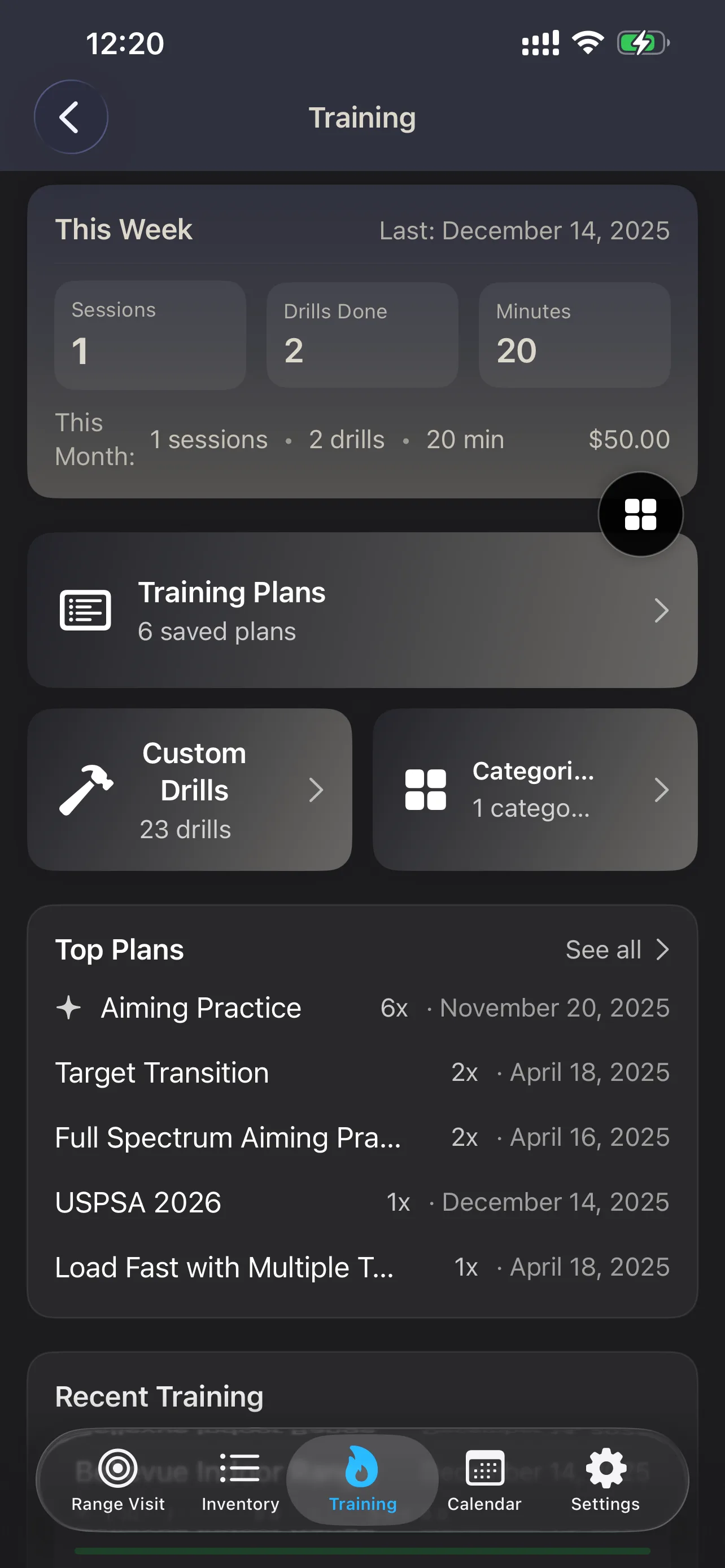
Shooting Training Log: How to Build Better Range Habits with Consistent Record Keeping
Most shooters want the same simple thing from practice: show up with a plan, leave with useful notes, and make the next session better than the last one.
That sounds straightforward, but training history often gets scattered across camera rolls, text notes, paper targets, and memory. After a few months, it becomes difficult to answer basic questions:
- What did I practice?
- Which firearm did I use?
- How many rounds did I fire?
- What should I work on next?
Range Pocket is designed to make shooting records and training history easier to organize and maintain. Our team at ArmorySync is going to break it down.
Start Every Range Session with a Simple Training Plan
A useful shooting practice plan does not need to be complicated, whether you are a competitive shooter, someone practicing for concealed carry defensive situations, or someone who just enjoys letting rounds fly. It only needs enough structure to give the session a purpose.
For many firearm owners, that means recording:
- The drill or skill being practiced
- The firearm and ammunition used
- Distance, round count, and target photos
- Notes about what felt consistent or inconsistent
- Skills that should be repeated during the next session
When these details stay together, a range visit becomes more than a memory. It becomes a training record that can be reviewed and improved upon.
Connect Training Drills to Your Range History
Shooting improvement happens faster when the plan and the results stay connected.
Range Pocket helps shooters keep drills, training plans, target photos, and range visit notes within a single workflow. Instead of storing a target photo without context, users can connect it directly to:
- The firearm used
- The range session
- The training objective
- Round count information
- Follow-up notes
This makes reviewing previous practice sessions significantly easier. You can quickly identify what was practiced, what improved, and what needs additional work.
Use Round Counts as Training Data
Round counts are often viewed strictly as maintenance information, but they also provide valuable training context.
A range session involving 150 rounds of structured drills tells a different story than 150 rounds of casual shooting.
Round Counts Help Answer Questions Like:
- How much focused practice have I completed?
- Which drills receive the most repetition?
- How often am I training with a specific firearm?
- What skills am I spending the most time developing?
When round counts are connected to notes, photos, and firearm records, they become more meaningful than simple numbers.
This is where Range Pocket offers advantages over spreadsheets or disconnected notes. The information remains connected to the complete training history.
Make Post-Range Reviews Part of Your Routine
The best shooting log is the one that remains easy to maintain.
After each range trip, a brief review can provide valuable insights:
- What went well?
- What needs additional work?
- Which drill should be repeated?
- Did any firearm require maintenance?
- Are there target photos worth saving?
- Were there any equipment issues?
Range Pocket is built around this practical review process. It helps firearm owners capture important details without turning every range visit into paperwork.
Keep Firearm Records, Training Notes, and Maintenance Together
Many shooters store information in multiple places:
- Notes apps
- Paper notebooks
- Photo galleries
- Spreadsheets
- Memory
Over time, that information becomes difficult to manage.
When firearm records, range visits, round counts, maintenance logs, target photos, and training notes remain connected, it becomes easier to understand both firearm usage and shooting progress.
A connected record system creates a clearer picture of:
- Training frequency
- Skill development
- Firearm performance
- Maintenance history
- Equipment changes
Why Consistent Shooting Records Lead to Better Training
Improvement rarely comes from a single great range session.
It comes from consistent practice, repeated drills, and the ability to review previous results.
Keeping a shooting training log helps transform isolated range trips into a structured progression over time.
The goal is not to create more work. The goal is to reduce the number of places important information can be lost.
When training plans, range visits, target photos, round counts, and firearm records stay connected, shooters gain a better understanding of where they have been and where they should focus next.
That is the foundation of a sustainable training habit: simple records, maintained consistently, and reviewed when they matter most.
Final Thoughts
A shooting training log is one of the simplest tools for improving consistency at the range.
By keeping practice plans, target photos, round counts, firearm records, and training notes together, shooters can create a clear history of their progress and make future practice sessions more productive.
Range Pocket is designed to support that process by helping firearm owners organize their training records, range history, and firearm information in one place.
And be sure to follow ArmorySync on Instagram!