Range Log Guide: How to Keep Records After Range Visits
Keeping a range log is one of the simplest ways to improve shooting performance over time. A structured record of each range visit helps you track progress, identify patterns, and make smarter adjustments in your training, so you can learn from mistakes or weakpoints and adjust to have consistent groupings.
A range session is easy to remember in the moment, but details fade quickly. Without a log, important context is lost.
Which firearm did you use? How many rounds did you fire? What distance were you working at? Which drills actually helped? What did the target look like?
A good range log preserves those details without turning training into unnecessary paperwork. Our team at ArmorySync is going to break it down.
Why a Range Log Matters for Firearm Training
A range log helps shooters move from casual practice to intentional training. Instead of guessing what worked, you can review real data from past sessions.
Benefits of Keeping a Range Log
- Improves shooting consistency over time
- Tracks firearm usage and round counts
- Helps identify effective drills
- Supports maintenance and wear tracking
- Creates structured training progression
Essential Information to Include in a Range Log
A useful range log does not need to be complicated. The goal is consistency, not paperwork.
Minimum range log checklist
- Date and range location
- Firearms used
- Round counts per firearm
- Drills or training plan
- Distance and environmental conditions
- Target photos
- Performance notes
- Adjustments for next session
The key is to capture enough detail so your future self can understand exactly what happened.
Connecting Your Range Log to Firearm Records
Range logs become significantly more valuable when they are tied directly to individual firearms.
Why firearm tracking matters
If you only record “100 rounds” in a notes app, that data is quickly forgotten. But when tied to a specific firearm, it becomes part of a meaningful usage history.
This helps with:
- Maintenance scheduling
- Barrel and component tracking
- Usage history over time
- Training performance by firearm
This is one reason Range Pocket connects range visits directly to firearms, inventory, target photos, notes, and training plans.
Using Target Photos to Track Shooting Performance
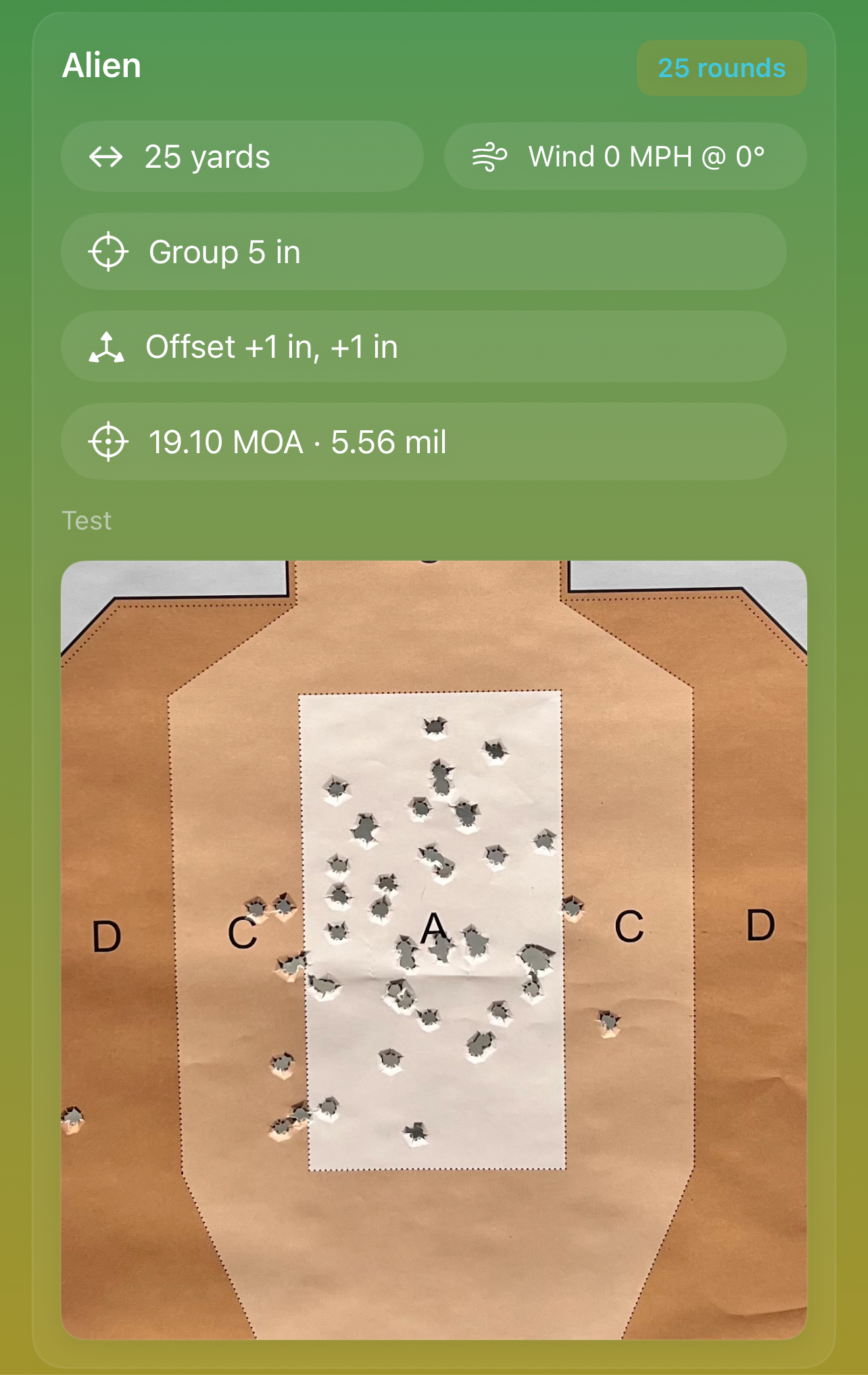
Target photos are one of the most valuable parts of a range log.
What target photos reveal
- Group size and consistency
- Sight alignment and adjustments
- Shot dispersion patterns
- Training progress over time
A single photo with context can often provide more insight than a full paragraph of notes.
What to include with each photo
- Firearm used
- Distance
- Drill or exercise
- Any relevant environmental conditions
Tracking Training Intent vs. Outcome
Most shooters only log what happened after the session. While useful, this misses a critical layer of improvement: intention.
Pre-range planning
Before each session, define:
- What skill you want to improve
- What drill you will run
- What success looks like
Post-range reflection
After the session, record:
- What actually happened
- What went well
- What needs improvement
- What to adjust next time
Why this matters
This creates a feedback loop:
- Planned training
- Actual performance
- Lessons learned
- Next-session adjustments
Our guide on turning range time into a training habit explores this concept further.
Keeping Your Range Log Simple and Sustainable
The most effective range log is not the most detailed one—it is the one you actually maintain consistently.
Simplicity principles
- Keep entries fast and repeatable
- Avoid overcomplication
- Focus on key data points
- Use templates when possible
A simple system used consistently will outperform a complex system used occasionally.
Building a Repeatable Training System
Consistency is what turns casual shooting into structured improvement.
Core elements of a repeatable range log
- Firearm
- Round count
- Drill or focus area
- Notes on performance
- Photos for reference
- Next steps for improvement
Start simple and expand only when additional detail adds value.
For more structure, visit the range log app page or explore Range Pocket.
And be sure to follow ArmorySync on Instagram!